Blog 119 11/06/2025 A Literary World: An Interview with Shelley Dark
A Literary World
An Interview with Shelley Dark

Today’s guest is author Shelley Dark, a writer with whom I had the pleasure of meeting a few weeks ago when she presented her book, Winter in Hydra, at the Hellenic Museum in Melbourne. After reading her book, I could see that her writing reflected her bubbly personality and I found the reason she went to Hydra fascinating, not only for her own reasons for going there, but because I spent my first winter in Hydra when I lived in Greece in the 1970s. At that time, I was in a taverna and a blonde woman was dancing the sirtaki with a young young man. It was pointed out that she was Marianne Ihlen, the Norwegian artist and muse of Leonard Cohen. At the time they had split up and she was staying at Cohen’s house with her twelve-year-old son. She left soon after, but continued to visit the island throughout her life. That is the lure of Hydra. It sums up the artist’s paradise, a place where painters, writers, and musicians, all head for at some time or other when in Greece, and they are rarely disappointed. Shelley followed in their footsteps in search of her own slice of Greece.
Welcome to A Literary World, Shelley. Please tell us about yourself. Where are you from and what inspired you to become a writer?
I live on the Sunshine Coast now, but I spent most of my married life on a cattle property on Queensland’s Granite Belt—which involved hard physical work and encouraged me to channel my creativity into obsessive gardening. I devoured books on design, travelled to admire the great European gardens, and built my own quasi-Versailles among the gum trees. Writing the garden notes for my local Diggers Garden Group became my apprenticeship for full-time writing.

Carrington
Retirement took us to the beach, and I developed an Instagram-tragic habit. To my surprise, people weren’t just liking my dawn photos—they were reading my captions and leaving comments. I began to put more love and care into them—and that remains one of my favourite writing exercises. I marketed online travel subscriptions to my diaries because it validated my writing and that gave me the confidence to think I could be a published author.
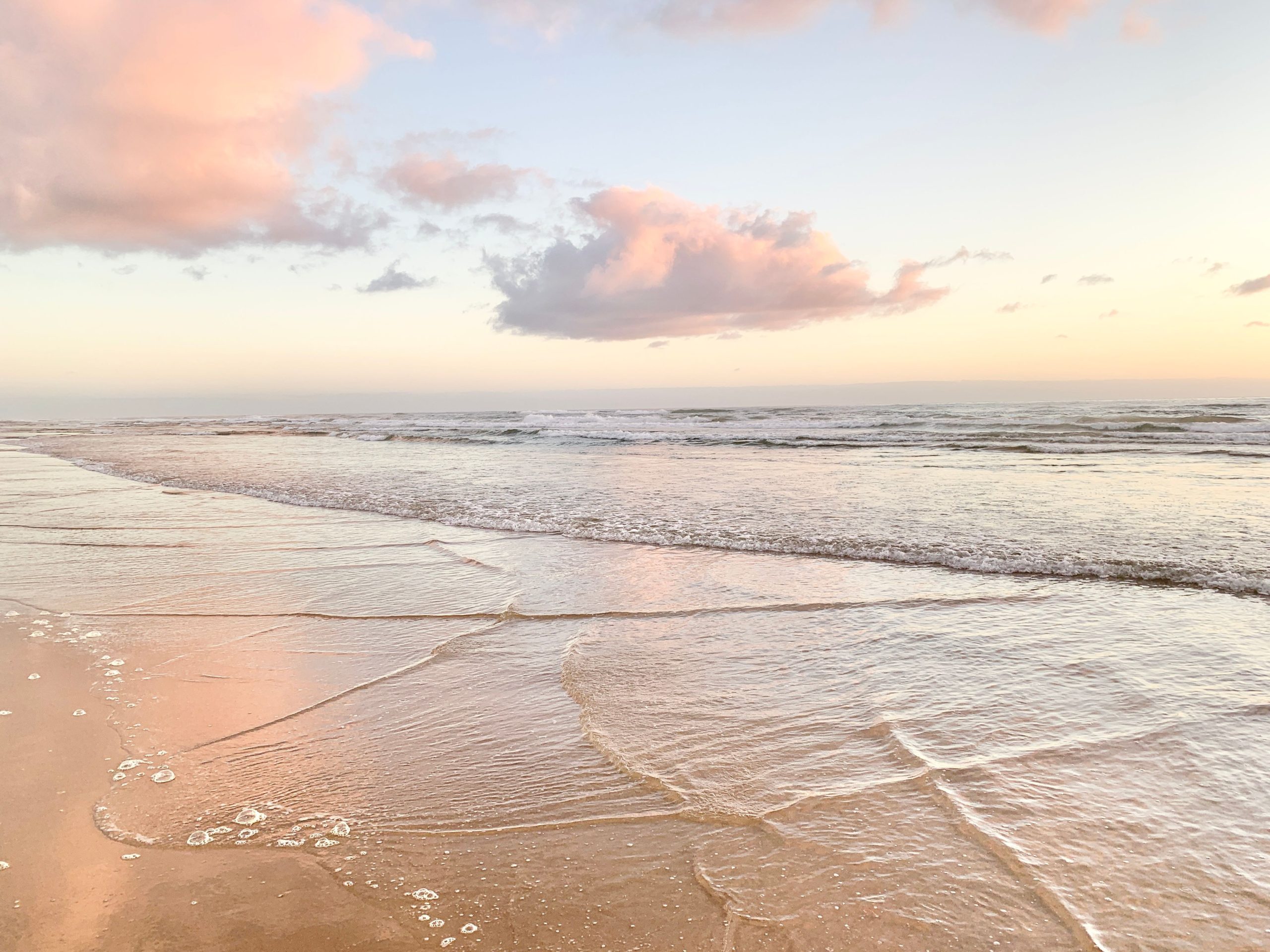
Marcus Beach dawn 2020
Then I discovered that my husband’s great-great-grandfather, Ghikas Voulgaris, was a Greek pirate, and I had a story begging to be told!
I write because I must.

After finding out about Ghikas, when did you decide to explore his past?
The moment Ghikas Voulgaris’s name surfaced alongside my husband’s and the word “pirate,” I felt a thrill of discovery. He’d been arrested south of Crete, convicted of piracy in Malta and held there for eighteen months, imprisoned on a hulk in Portsmouth Harbour, then transported to Australia in 1829. I had no idea where this would lead, but fate had tossed me a single thread—and all I needed to do was follow it. That thread unravelled into years of research: two trips to Hydra, Malta, and Portsmouth; visits to the Kew Archives in London and to Cork; and ultimately into two books, with a third on the way.
What sort of preliminary reading did you do to prepare yourself for this adventure to Hydra?
I scoured the internet for every source on the Greek War of Independence and anything about the seven pirates: academic histories—both contemporary and modern analyses—alongside shipping logs, naval records, trial reports, and newsletters of the day. I pored over official correspondence between the Colonial Secretary and the Governor of Malta, combed through tourist diaries hidden in dusty archives, and hunted down mentions in obscure journals and newspapers.
The most astonishing revelations often emerged from primary materials buried in archives. I wandered through the original homestead on the property where Ghikas first worked, through state and national libraries, archives, and museums, tracing fragments in yellowed margins and tattered manuscripts. Research became my obsession—an unrelenting pull that kept me waiting months or years for the next fix. And when a single overlooked detail surfaces—something no one else has noticed—the sense of reward is as intoxicating as finding real treasure.

Benaki ship off coast of Hydra anon mid 19th-century
What were your first impressions of the island?
It felt timeless. In winter, Hydra is bathed in a pale, silvery light—soft, mist-shrouded, and muted compared with the glare of summer heat. Stone houses, rooted in bedrock for centuries, climb the hills. Whitewashed walls serve as a quiet backdrop to bursts of colour—enamel doors, faded pastel shutters, weathered hardware, even bougainvillea. The architecture’s uniformity—square, austere, and unforgiving—creates its own serene harmony.

There are no cars or mopeds—only cats and donkeys, the echo of footsteps, the clacking of ships’ rigging in the harbour, the cry of seagulls, and the distant hum of a portable radio playing bouzouki as a boat owner mended a fishing net outside my window. I stayed in an original ship owner’s mansion right on the port, and I felt the weight of history, ambition, and old wealth in its two-feet-thick walls.
When I surveyed the quay, thinking ‘Ghikas walked here’—suddenly his story was no longer in the past. I was living it.

How did you find exploring alone? Was it a daunting experience, cathartic, and did it inspire you more?
I love travelling solo.Exploring alone is all of the above—daunting, cathartic, and endlessly inspiring. I can move at my own pace, free to frame the perfect photo and decide where to eat lunch. Alone, I absorb every detail: I search for the right words to capture what I see, and I engage more with the locals. Even a simple meal tastes more intense when I’m the only one in the restaurant. I spend hours wandering back lanes, hiking the hills, photographing the way the light falls on doors and doorknobs. When you’re alone, the island opens up to you. There’s no one to dilute it. The silences are bigger—and so are the moments of revelation.
Can you share with us a few photographs that were relevant to your research from the archives and the Benaki Museum?

Benaki oil of a young Greek Boy by Papayannakis 1837

Benaki pair pistols Greek War Independence
In what way did you feel you began to know Ghikas more during this trip?
By walking where he walked, I began to know Ghikas more intimately. Standing at the water’s edge, I pictured the ships he saw and imagined him counting the onesbelonging to his family. From Kiafa, I looked down on the port and imagined him taking in that same view, dreaming of new horizons. I brushed my hand along walls he might have touched, feeling his presence in the rough stone. He was such a young man when he left Hydra on his last voyage—a pirate voyage as it turned out—about eighteen years old. I came to understand his pride, his loyalty, his deep love of the island, his frustration at conditions during the war. He wasn’t a hero—but he wasn’t a villain either. He was a boy who thought he could outsmart fate, and he couldn’t. I became very attached to him.
Will the next part of his journey take you to Malta and elsewhere?
Yes, it already has. Malta—what a breathtaking place— where Ghikas’ trial unfolded. From the moment I arrived in Valletta, I fell in love with its golden sandstone, soaring ramparts and unique wooden balconies.
In the National Library, the archives at Rabat, and the Maritime Museum, I unearthed primary records. I was even given a tour of the underground cells of the old Castellania Prison (now the Department of Health) where the pirates were held for eighteen months. I spoke with historians and spent a morning with Judge Giovanni Bonello, a living encyclopedia of Maltese history. I saw Manoel Island, where the pirates were held in quarantine. And I saw them trudging up St John Street to their cells. In England, I visited Portsmouth Harbour where they were held on a hulk; I spent two weeks at the Kew Archives in London; and then I went to Cork to research the story of Ghikas’ Irish orphan wife, Mary. The story is not finished yet.

Malta 2018

Underground cell. Castellania Prison Malta
Do you plan to research Ghikas’wife Mary’s background too?
Absolutely, I already have. Mary’s story is every bit as compelling. She was one of 200 Irish girls sent on the Red Rover as part of a government initiative to supply the colony with domestic servants, and I daresay, wives. How strange for an Irish orphan girl to marry a patriarchal Greek pirate convict with a wealthy past. But she had a past too—and to my mind, a spine of steel. I’m writing her novel next. She deserves the full spotlight.
Finally, a few things about your writing life. Do you have a special writing area? Do you listen to music while writing?
At the beach, sunlight pours through white shutters into a cluttered room overlooking a green clipped courtyard garden. I sit at an antique French fruitwood desk covered with dual screens, books, notes, timelines, and half-drunk cups of coffee. No music—just the crash of the ocean.
In the city, I swap that for a minimalist urban oasis: black desk, black lamp that looks like a 1950s saucer hat, floor-to-ceiling glass, and not a speck of clutter. A tiny, finely engineered Japanese stainless-steel bell sits at the ready—I ring it to clear my mind.

Writing City.
I write just as happily in both places, and it’s fun to move from one to the other. I’m not precious about writing rituals, although I am happiest when I have my big Apple display, my MacBook Pro and my Herman Miller chair.
And fresh flowers. Always fresh flowers. I show up all day, every day—and often half the night—because that’s where the joy lives.

Fresh flowers from my garden
On behalf of my readers, I would like to thank you for giving us a glimpse into your writing life, Shelley, and I look forward to reading more of your adventures soon. For those who haven’t yet read the book, I am sure you will enjoy it, as I did. It will certainly leave you wanting to book a flight to Hydra.

With Shelley at the Hellenic Museum, Melbourne.
LINKS:
https://m.facebook.com/shelley.dark.novelwriter
https://www.instagram.com/shelleydark/
THE BOOKS

Chanticleer International Book Awards (CIBA) First Place Hemingway Awards for 20th Century Wartime Fiction


LINKS
Facebook: https://www.facebook.com/profile.php?id=100006545417928
Facebook Author Page: https://www.facebook.com/KGauciAuthor
Amazon Author Page: https://www.amazon.com/~/e/B00OPW68SM
Linkedin: https://www.linkedin.com/in/kathryn-gauci-409a638b/
Twitter @KathrynGauci
Bluesky @kathryngauci.bsky.social
Instagram: https://www.instagram.com/kathryngauci/
BookBub: https://www.bookbub.com/authors/kathryn-gauci
For my newsletter. Please fill out the form on my website.